Compliance10 min
Understanding BS EN standards for imported natural stone
BS EN standards for natural stone split into product standards and test methods. Knowing the difference stops a merchant asking a supplier for the wrong document.
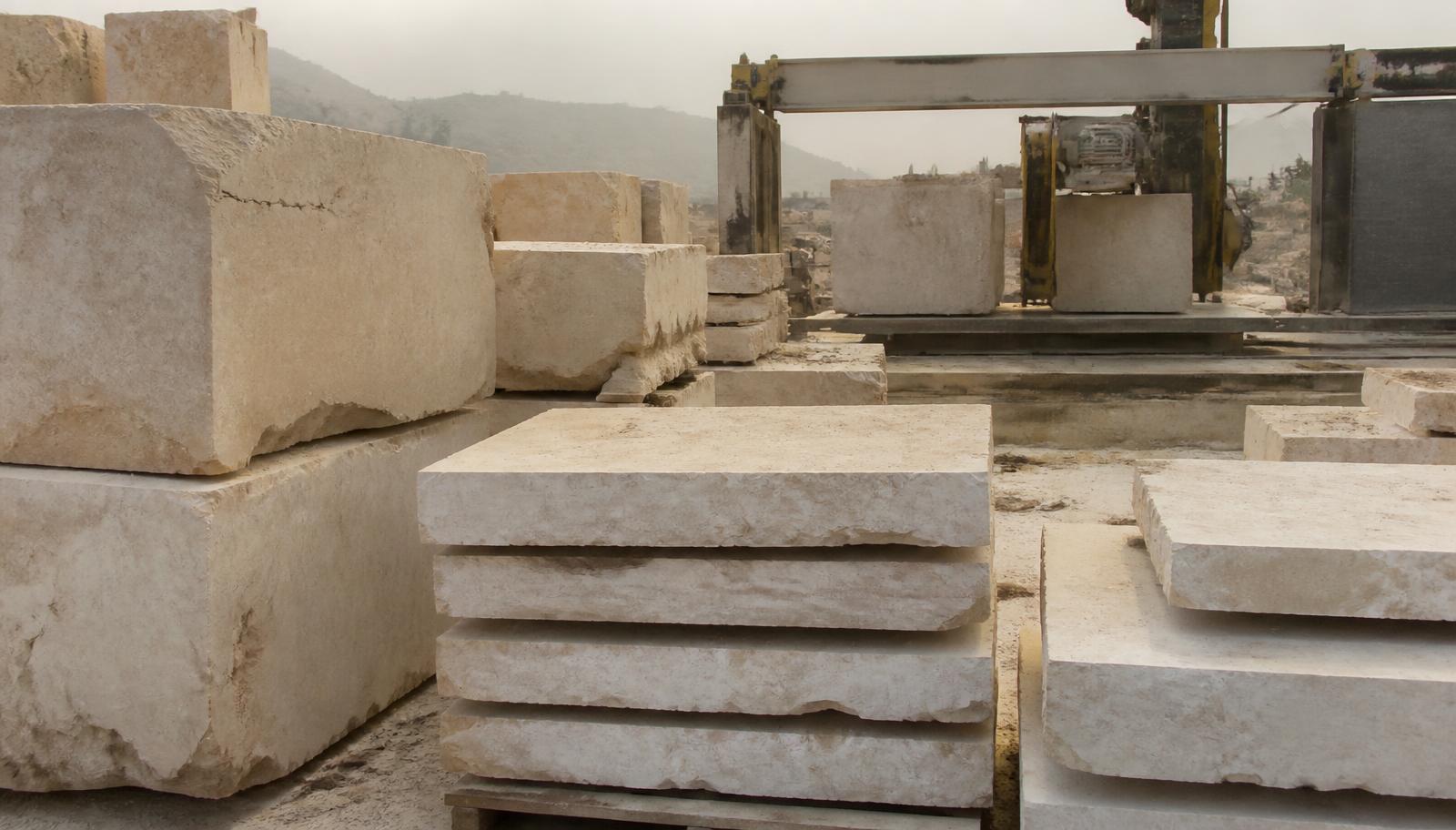
Two families of standard, not one
Merchants new to importing stone sometimes ask a supplier for 'the BS EN certificate' as though a single document covers everything. It does not. The BS EN system for natural stone is built from two distinct families: product standards, which set out what a finished piece must be dimensionally and how its properties must be declared, and test method standards, which define how a given property — strength, absorption, slip resistance — is measured in the first place, independent of what the finished product is.
Understanding that distinction matters in practice. A supplier can hold test results against every relevant method standard and still fail to make a valid declaration if the wrong product standard has been applied to the item being sold. This piece works through both families in general terms, as they apply to the shapes a UK buyer of limestone is likely to be sourcing: paving, cladding, kerbs, setts and flooring.
Product standards, in general terms
BS EN 1341 covers slabs of natural stone for external paving, setting requirements around dimensions, slip resistance and durability appropriate to pedestrian and light vehicular use. This is usually the standard a public realm specification will name directly.
BS EN 1342 covers setts, and BS EN 1343 covers kerbs. Both share much of the same underlying testing basis as BS EN 1341 but apply different dimensional tolerances suited to smaller, thicker units. A kerb quoted against BS EN 1341 rather than BS EN 1343 has, strictly, been quoted against the wrong standard.
BS EN 1469 covers slabs for cladding, where anchorage-specific testing becomes relevant — the breaking load at dowel holes and kerf slots is a companion test that any cladding specification should ask about alongside the base product standard, since a panel with good flexural strength can still fail at its fixing point if the anchorage detail has not been separately assessed.
BS EN 12057 covers modular tiles and BS EN 12058 covers flooring and stair slabs, both defining dimensional tolerance and finish requirements for internal use.
Test method standards, in general terms
Underneath every product standard sits a set of test methods that generate the physical data referenced in a declaration of performance. BS EN 1926 measures compressive strength. BS EN 12372 measures flexural strength under concentrated load. BS EN 13755 measures water absorption at atmospheric pressure. BS EN 1936 measures density and porosity. BS EN 12371 measures frost resistance, usually alongside a pre- and post-cycling flexural comparison to BS EN 12372.
BS EN 14157 measures abrasion resistance using a rotating disc, reported as a groove length — the shorter the groove, the more abrasion-resistant the surface. BS EN 14231 measures wet slip resistance using the pendulum method, and BS EN 14066 measures resistance to thermal shock ageing, relevant to stone near heat sources or subject to rapid sun-to-shade temperature swings. BS EN 12407 is a petrographic examination standard describing mineral composition and texture rather than a mechanical property.
None of these test names are, by themselves, a claim that a given stone has been tested. They describe the recognised method a laboratory would use to generate a figure. Our own range is tested against BS EN 1936, 13755, 1926, 12372, 14157 and 12371, with results renewed on a batch basis and issued alongside a Declaration of Performance for each shipment.
Standards that come up less often
Two further method standards are worth knowing even though they are asked about less frequently in a routine paving or cladding enquiry: resistance to salt crystallisation, relevant where de-icing salt or coastal spray is present, and resistance to soiling and biological growth, more often asked about for shaded, damp external flooring. Neither is a routine line item on most trade specification sheets, but a specifier working in a marine or heavily salted environment should ask for it specifically.
Declarations of performance, CE and UKCA marking
For product families covered by a harmonised standard — including BS EN 1341, 1342, 1343 and 1469 — a manufacturer placing product on the market is generally required to issue a Declaration of Performance and apply the relevant conformity marking. In Great Britain the position has moved between CE and UKCA marking more than once since EU exit, and the correct current requirement depends on the product category and the date placed on the market. A UK buyer should confirm the current position with their own compliance adviser rather than relying on any single supplier's summary, because this area has genuinely shifted over time.
What a supplier controls directly is the underlying data behind that declaration: test results against the correct method standards, tied to the specific stone, finish and batch actually being shipped, referencing the correct product standard for the item. That should include the essential characteristics relevant to the intended use — for paving, that means slip and frost resistance; for cladding, flexural strength and anchorage; for both, dimensional tolerance and any declared substances of concern, which for an untreated natural limestone is normally negligible.
The most common paperwork problem in this part of the trade is not fraudulent data — it is stale data, taken from one early shipment and reused unchanged across later shipments drawn from a different part of the quarry. A buyer should always ask whether the certificate in hand matches the batch physically in the container, not just the name of the stone.
Key takeaways
- Product standards (BS EN 1341, 1342, 1343, 1469, 12057, 12058) define what a finished piece must be; test method standards define how a given property is measured.
- Using the correct product standard for the item — a kerb is BS EN 1343, not BS EN 1341 — matters as much as holding underlying test data.
- CE and UKCA requirements for stone products have changed since EU exit; confirm the current position with a compliance adviser rather than a supplier summary.
- Always check that a certificate matches the specific batch in the container, not just the name of the stone type.
More from the journal
Related stones and reading
Ask which standards apply to your specification
Quotations available to your nearest port or delivered to your yard, on request.