Maintenance7 min
Sealing and maintaining limestone floors: a general guide
Limestone is a forgiving, long-lasting floor, but it is not a maintenance-free one. Setting expectations correctly at specification stage avoids most of the complaints that follow.
Why limestone needs different care to porcelain
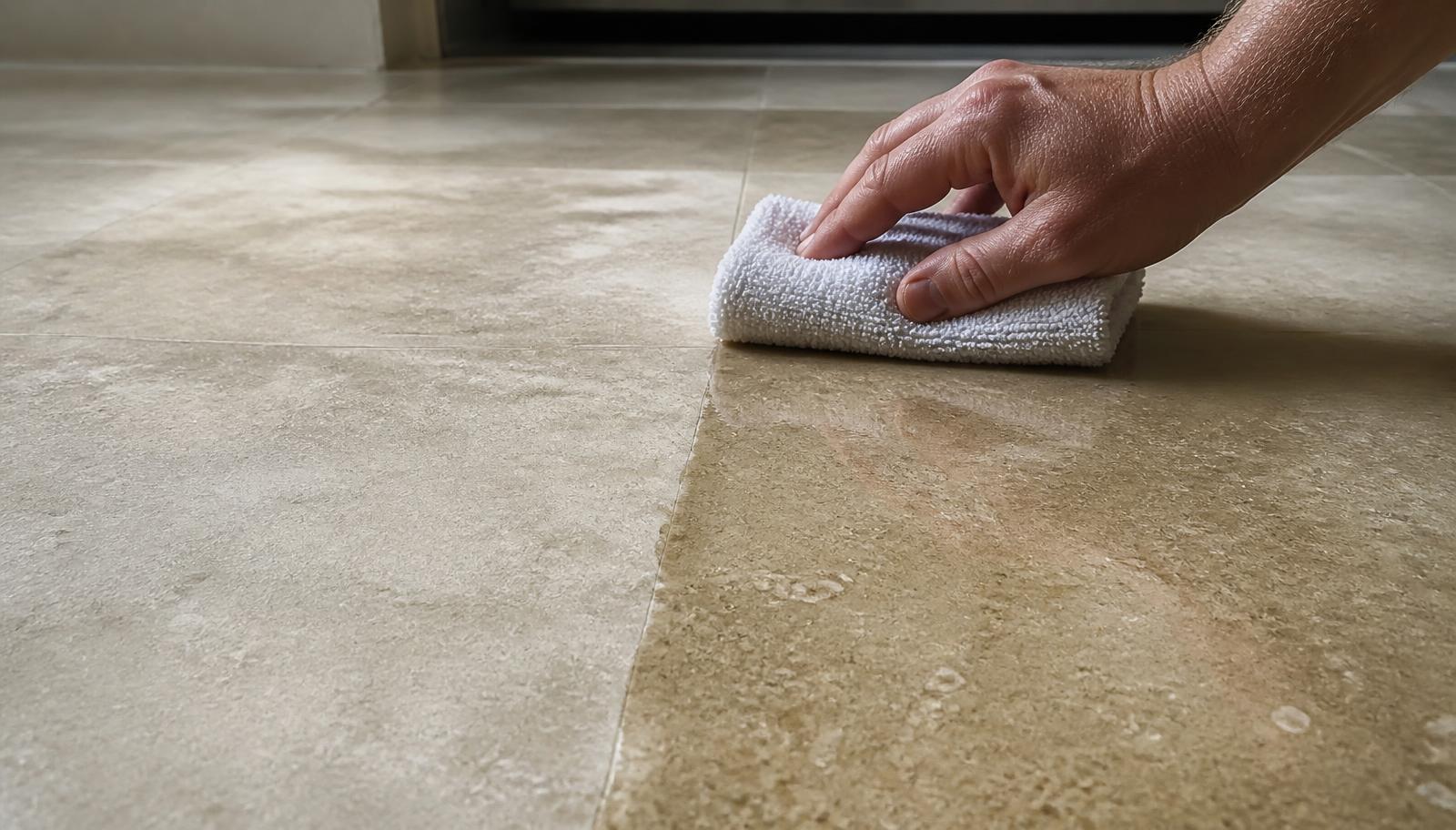
Limestone is a calcium carbonate rock, which makes it chemically reactive to acids in a way that porcelain and most engineered surfaces are not. Everyday substances — vinegar, citrus juice, some tile cleaners, and acidic rain in polluted urban areas — can etch the surface of an unsealed limestone floor, leaving a dull mark where the acid has reacted with the stone. This is not a fault in the material; it is simply how any calcium carbonate stone, including marble and most limestones, behaves. It just needs to be understood and planned for rather than discovered after the fact.
Setting this expectation with a client at the point of specification, not after handover, avoids the majority of complaints that come back about natural stone floors. A client who understands the material is choosing a genuinely different maintenance relationship, not a lower-quality alternative to porcelain, tends to be a much happier client two years in.
Sealing, in general terms
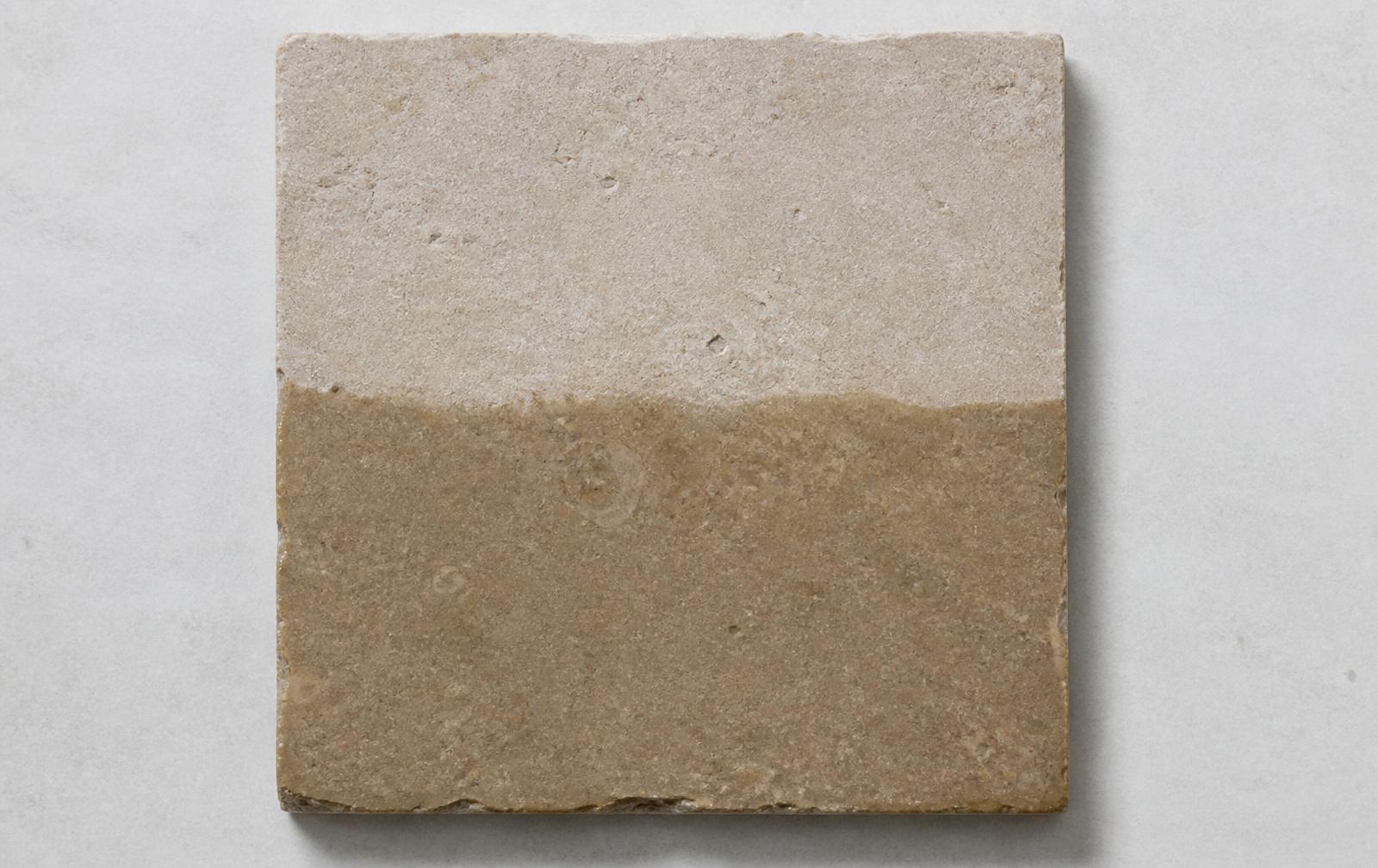
The purpose of sealing is to reduce how much liquid and staining agent can penetrate the stone's surface, buying time to wipe up a spill before it marks the floor permanently, and reducing water absorption generally. As covered in more detail elsewhere on this site, impregnating sealers penetrate the stone without much changing its appearance, while film-forming or enhancing sealers sit on the surface and usually darken and add sheen to it.
Sealing is not a one-off, permanent treatment. Impregnating sealers wear over time with foot traffic and cleaning, particularly in high-use commercial areas, and manufacturers typically recommend re-application on a cycle measured in years rather than decades — the exact interval depends on the product and the traffic, and should come from the sealer manufacturer's own guidance rather than a general rule. External floors exposed to weather generally need resealing more often than sheltered internal floors.
A new limestone floor should always be sealed only after it has been laid, grouted and allowed to dry fully, since sealing over residual construction moisture or uncured grout can trap moisture beneath the surface and cause problems later.
Everyday cleaning
Routine cleaning of a sealed limestone floor is straightforward: regular sweeping or vacuuming to remove grit that would otherwise scratch the surface underfoot, and damp mopping with a pH-neutral stone cleaner rather than a generic household cleaner. Acidic cleaning products — many bathroom and kitchen cleaners, and anything containing vinegar or citrus — should be avoided entirely on limestone, sealed or not, since they can etch through a worn sealer layer or attack an unsealed surface directly.
Spills should be wiped up promptly rather than left, particularly oil, wine, coffee and anything acidic, even on a sealed floor, since sealing slows penetration rather than preventing it indefinitely. For external limestone, periodic checking for moss or algae in shaded, damp areas is worthwhile, since biological growth left unchecked can both stain the surface and make it more slippery underfoot over time.
What not to use
Avoid bleach, ammonia-based cleaners, and anything acidic on any limestone surface. Avoid pressure-washing at close range or high pressure on riven or textured external paving, since it can strip sealer unevenly and, on some finishes, disturb loose surface material. A soft brush and a proper stone cleaner will do the job with far less risk to the surface.
Setting expectations at quotation stage
The single most useful thing a merchant can do when selling limestone is to explain, briefly and honestly, what owning a natural stone floor actually involves — sealing, periodic resealing, the right cleaning products, and the fact that natural variation and gradual wear are part of the material rather than a defect in it. Clients who hear this up front rarely complain about it later; clients who are sold limestone as a maintenance-free alternative to porcelain generally do.
Key takeaways
- Limestone reacts to acids and can etch — this applies to unsealed floors and, over time, to worn sealed floors too.
- Impregnating sealers reduce absorption without changing appearance much; they wear over time and need periodic reapplication.
- Use pH-neutral stone cleaners only; avoid bleach, ammonia and anything acidic.
- Set maintenance expectations with a client at specification stage, not after the floor is laid.
More from the journal
Related stones and reading
Ask us about care guidance for a specific finish
Quotations available to your nearest port or delivered to your yard, on request.