Specification6 min
Why limestone looks different wet than dry, and why it matters for specification
A limestone sample that looks pale and neutral in a showroom can turn noticeably darker and richer the first time it rains. That shift should be shown to a client, not discovered by them.
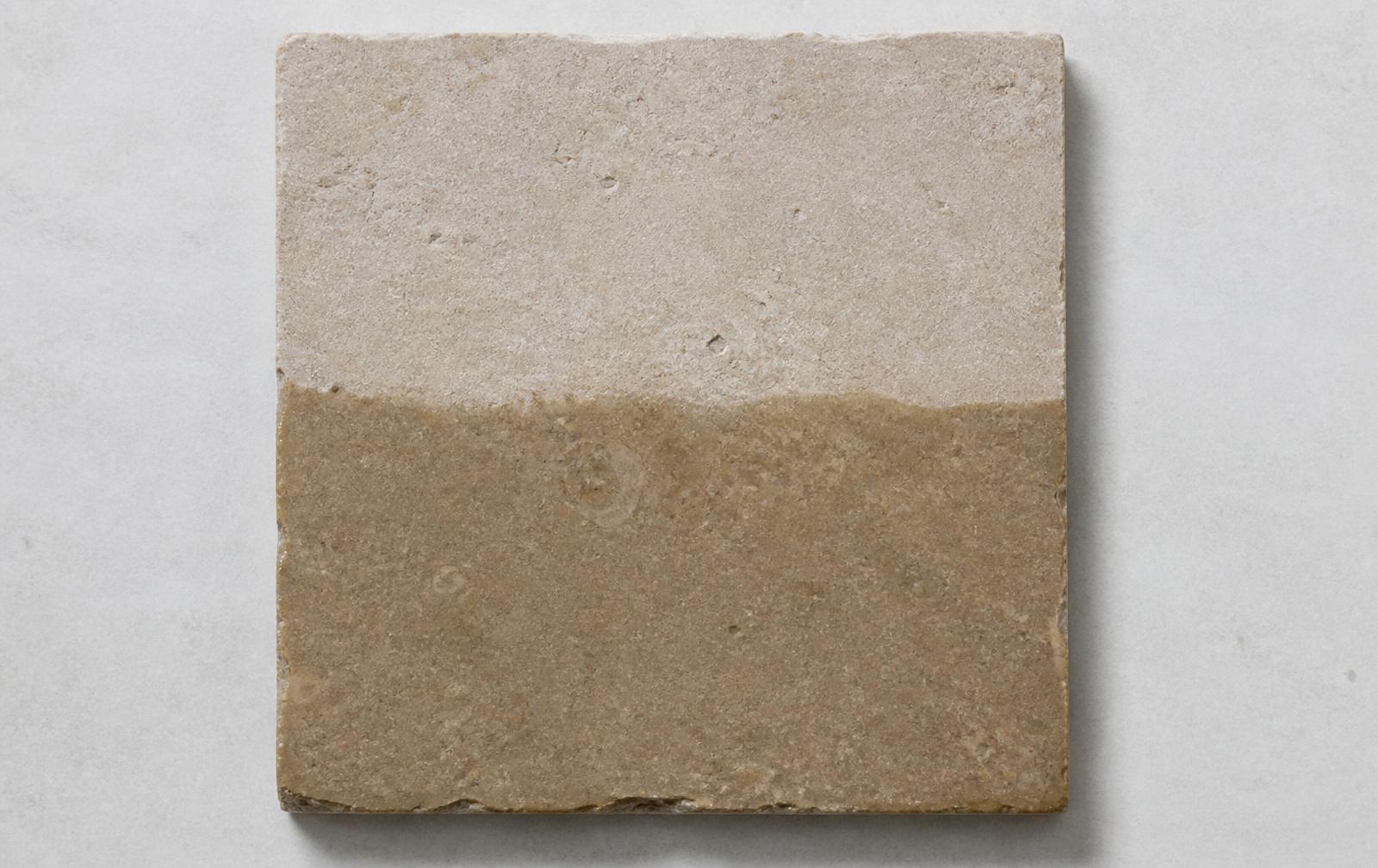
The same stone, two appearances
Almost every natural limestone darkens when it gets wet, some beds more dramatically than others. Rainwater fills the fine surface pores of the stone and changes the way light reflects off it, deepening the colour and increasing contrast between grain and matrix. A pale buff or cream limestone can look markedly richer and warmer under rain than it did as a dry sample on a showroom shelf, and a grey bed can shift from a flat, neutral tone to something noticeably darker and more saturated.
This is a normal, expected property of natural limestone, not a defect. But it catches out specifications more often than it should, because a client is usually shown a single dry sample indoors and asked to approve a colour based on that alone.
Why this matters for a UK specification
The UK's climate means an external limestone floor spends a meaningful proportion of the year wet, whether from rain, condensation, or simply morning dew. A client who approves a stone purely from a dry sample is effectively approving only part of how that floor will actually look for much of the year. Showing both states before an order is placed avoids a difficult conversation after installation, when a client sees their new terrace look noticeably different from what they remember approving.
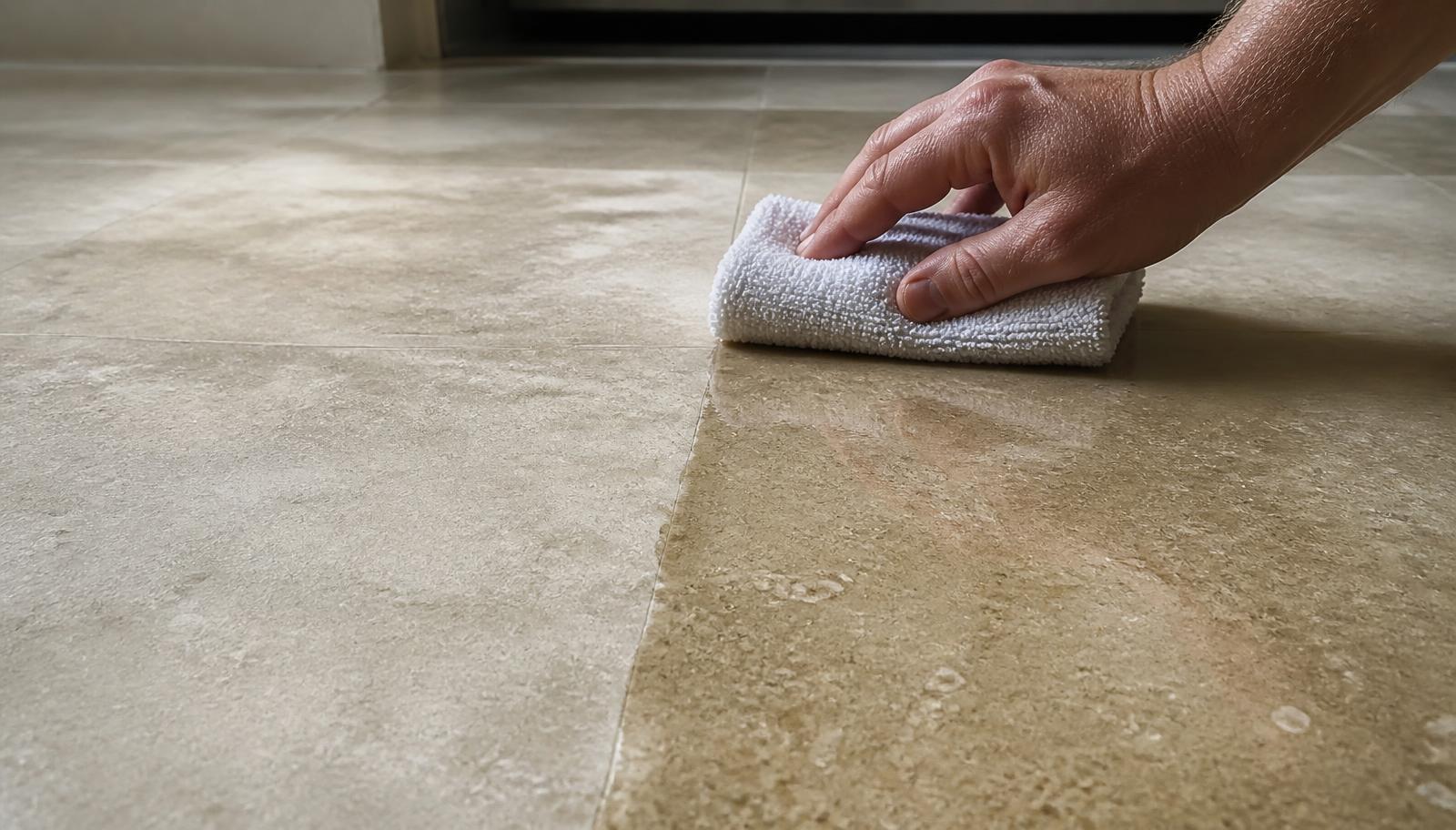
The practical fix is simple: wet the sample with a hose or a bucket of water before a client signs off on it, and let it dry naturally in front of them if there is time, so they see the full range rather than a single snapshot. A sample that has only ever been seen dry, indoors, under artificial light, has not really been assessed for an external application at all.
Sealing and its effect on wet appearance
Sealing a limestone floor changes this picture further, and should be discussed alongside the wet-dry comparison rather than separately. Impregnating sealers, the most common type used on external limestone, sit within the pores of the stone rather than forming a film on top, and are chosen specifically to reduce water absorption without significantly altering the dry appearance of the stone. A well-chosen impregnating sealer can reduce, though rarely eliminate, the wet colour shift, since less water is able to penetrate the surface in the first place.
Film-forming or 'enhancing' sealers sit on top of the surface and deliberately intensify the wet-look colour permanently, effectively fixing the darker, richer appearance whether the floor is actually wet or not. This is a legitimate aesthetic choice for some clients, but it is a different decision from moisture protection and should be presented as one, since it changes maintenance and, on some finishes, slip characteristics as well.
Whichever approach is chosen, sealing should be tested on an offcut or a discreet area first, since absorbency and reaction to sealer can vary between beds of the same stone type, and a sealer that performs predictably on one batch is not guaranteed to behave identically on another without independent testing to confirm it.
Key takeaways
- Wetting is a normal property of natural limestone, not a defect — most beds darken noticeably when wet.
- Always show a client both a dry and a wet sample before they approve a colour for external use.
- Impregnating sealers reduce absorption without much changing dry appearance; film-forming sealers deliberately fix a darker wet-look colour.
- Test any sealer on an offcut first — reaction to sealer can vary between beds of the same stone.
More from the journal
Related stones and reading
Ask for a sample shown both wet and dry
Quotations available to your nearest port or delivered to your yard, on request.